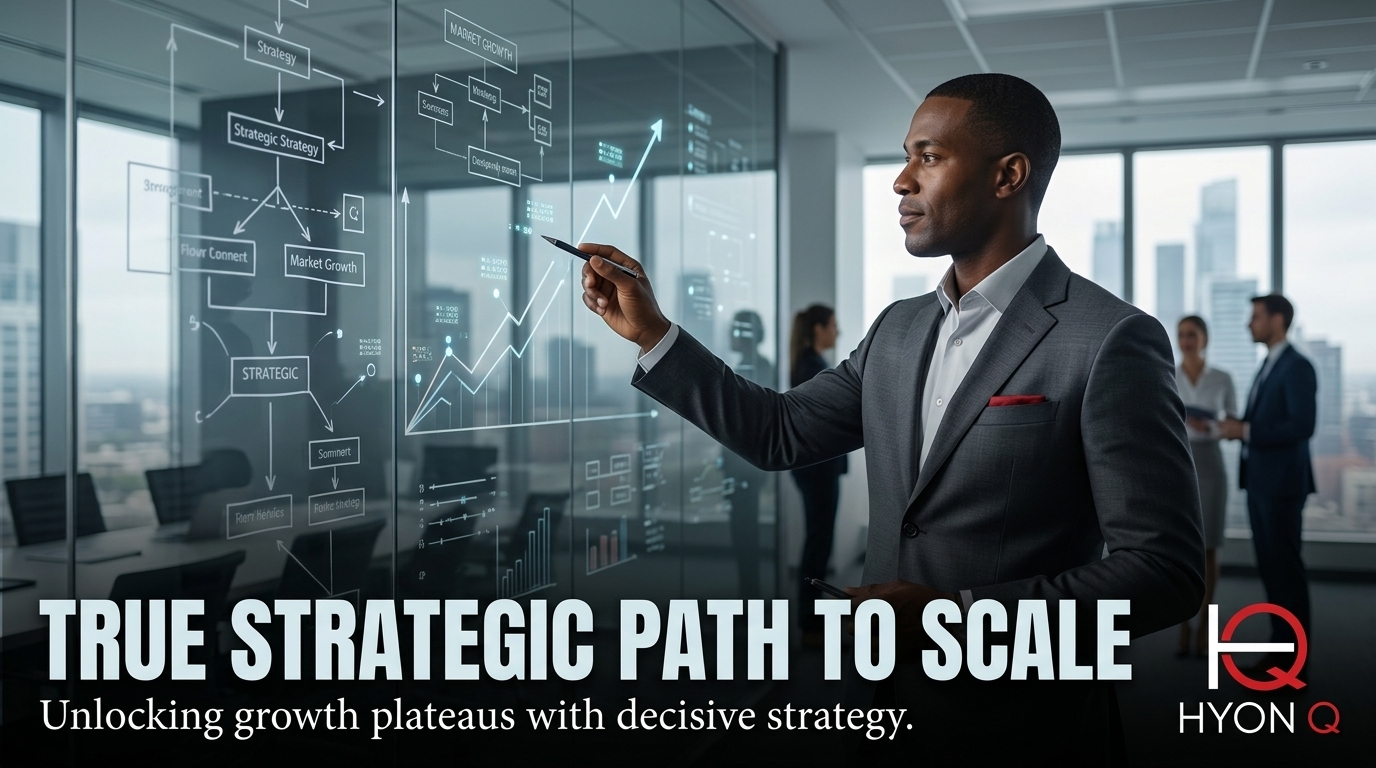
In 2026, building a solid business foundation requires more than just an aggressive sales team and a good product. Many companies inevitably reach a phase where revenue stagnates despite an increase in marketing spend and effort. Understanding how to scale an established business plateau is one of the most complex challenges for growth-focused entrepreneurs.
Overcoming this hurdle requires moving beyond basic management and engaging in strategic business consulting to align daily operations with long-term financial health. A true strategic path to scale for entrepreneurs demands a deep dive into corporate structure, market presence, and internal efficiencies.
Brand Positioning and Market Strategy
Scaling smoothly requires bridging the critical gap between daily operations and a long-term market strategy. As a company grows, its original messaging can easily become diluted. A clear, cohesive brand positioning strategy dictates exactly how a business scales, who it hires, and how it effectively captures new market share.
Without data backed business growth recommendations, companies risk expanding blindly without a defined competitive edge. Effective market positioning ensures that your service offerings are highly targeted and that your corporate identity resonates with the appropriate, high-value demographic. Aligning this market strategy with your corporate structure is the foundation of sustainable, long-term expansion.
Conducting Operations Reviews and Gap Analysis
Operational friction points cost scaling companies real dollars every single quarter. As businesses expand, they often outgrow their initial internal processes, leading to unseen bottlenecks. Stop guessing where these operational inefficiencies lie. Executing a comprehensive gap analysis for business is a critical first step toward fully optimizing internal operations.
A forensic operations review goes far beyond a standard audit; it analyzes deep organizational inefficiencies—from streamlining month-end close cadences to correcting undocumented payroll leaks and evaluating cross-entity capital accounts. Finding and correcting these structural gaps stabilizes the company, ensuring that future scaling efforts do not break the underlying operational framework.
The Strategic Path to Scale
Below is a breakdown of how professional consulting identifies and resolves the most common scaling friction points:
Focus Area | Typical Scaling Challenge | Strategic Consulting Solution | Long-Term Advantage |
|---|---|---|---|
Brand Positioning | Misaligned marketing efforts and diluted messaging failing to capture market share. | Implementing data-backed market positioning to refine and target corporate messaging. | Ensures the brand attracts high-value demographics and supports premium service pricing. |
Operations Review | Inefficient month-end cadences, payroll leaks, and internal friction. | Conducting a forensic operations review to stabilize and correct internal structural processes. | Reduces operational overhead and ensures the internal framework can handle increased transaction volume. |
Gap Analysis | Scaling efforts stalling completely due to unseen operational bottlenecks. | Executing a specialized gap analysis for business to identify exact points of failure. | Establishes an actionable roadmap for profitable business growth without disproportionate risk. |
Laying the Groundwork for Long-Term Expansion
Professional advisory sets the stage for sustainable scaling. Successfully breaking through a revenue ceiling requires meticulously aligning daily operations with long-term strategic goals. By integrating these highly analytical practices—from brand positioning to forensic gap analysis—companies can transition away from reactive management. Instead, they create an actionable roadmap for profitable business growth that supports long-term wealth preservation and market dominance.
Need help identifying operational gaps and aligning your market strategy with your corporate structure? Explore business creative solutions at HYON Q: https://www.hyonq.com/services/business-creative-solutions